
In this article
- Where the fourth wall comes from
- Realism makes it the rule
- What breaking the fourth wall means
- Famous fourth wall breaks
- In the theater
- In movies
- On TV
- Why break the fourth wall?
- How to act with the fourth wall
- Onstage
- On camera
- How to break it without losing the scene
- Related terms: aside, monologue and soliloquy
- Frequently asked questions
- What does breaking the fourth wall mean?
- Who came up with the fourth wall?
- Why is it called the fourth wall?
- What movies and TV shows break the fourth wall?
- Is an aside the same as breaking the fourth wall?
- Can you look at the camera in an audition?
Quick answer: The fourth wall is the invisible wall between the stage and the audience. Actors play the scene as if it were there and nobody were watching. Breaking the fourth wall means talking straight to the audience or looking into the camera, the way Ferris Bueller and Fleabag do. The idea goes back to Denis Diderot, who described it in 1758.
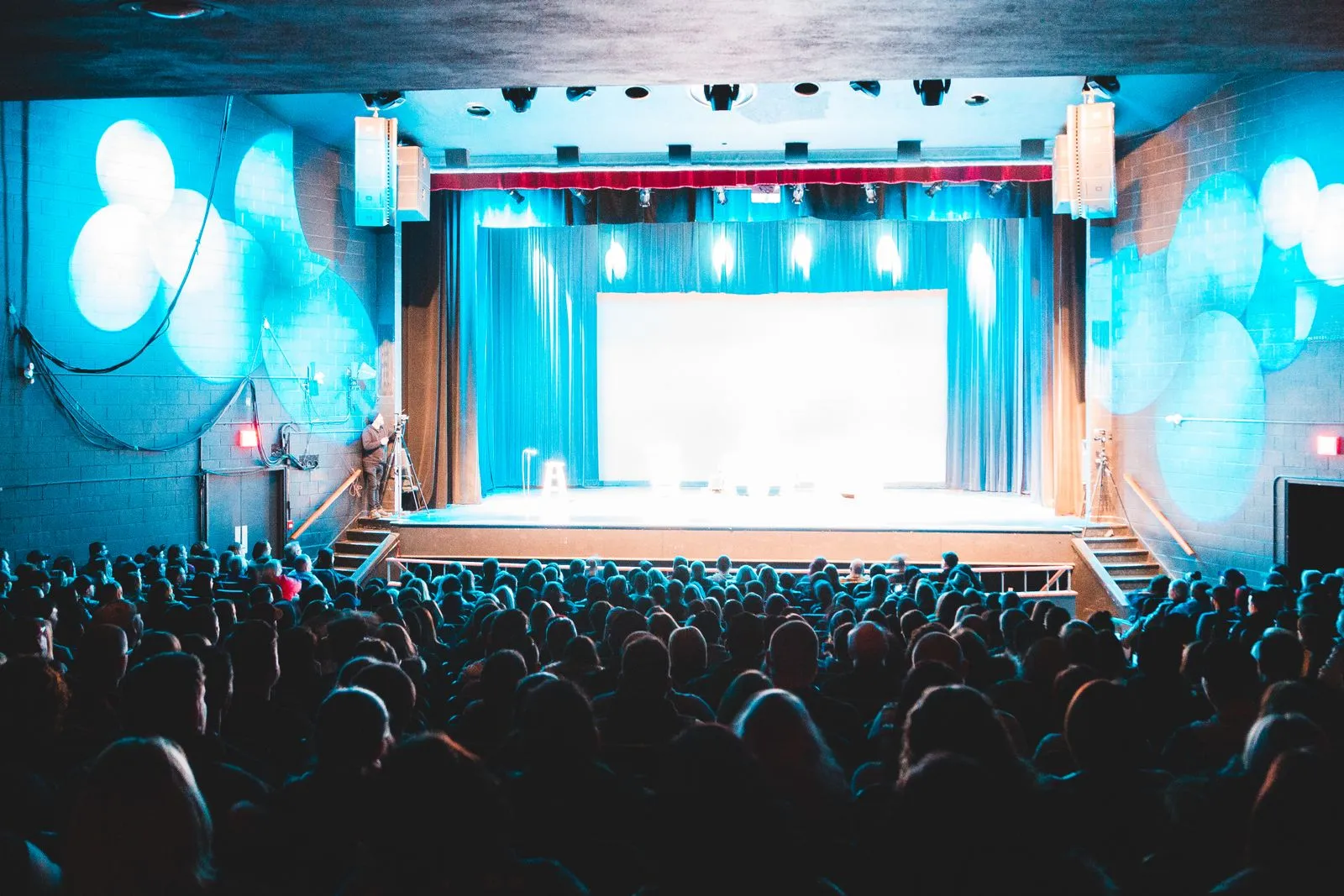
Picture a play set in a living room. From your seat you see the back wall and the two side walls. The one on your side, however, is missing. Through that gap you watch the characters as if you were spying on them, while they carry on as though they were alone.
Film and TV work the same way, except the wall is the camera lens. The Cambridge Dictionary adds a detail every actor should know. By its definition, the wall also breaks when an actor stops talking as the character and starts talking as themselves.
Where the fourth wall comes from
The concept goes back to Denis Diderot, the French philosopher and playwright. He wanted theater to look more like real life. In his 1758 Discourse on Dramatic Poetry, he told writers and actors to carry on as if the spectator didn’t exist. His advice was to imagine a great wall along the edge of the stage. Behind it, you act as if the curtain never went up.
Realism makes it the rule
For centuries, theater had worked the other way around. From ancient Greece through the Renaissance, characters often spoke to the audience in asides and soliloquies. The fourth wall only became standard with 19th-century realism and naturalism, as stages filled up with three-walled rooms and real furniture.
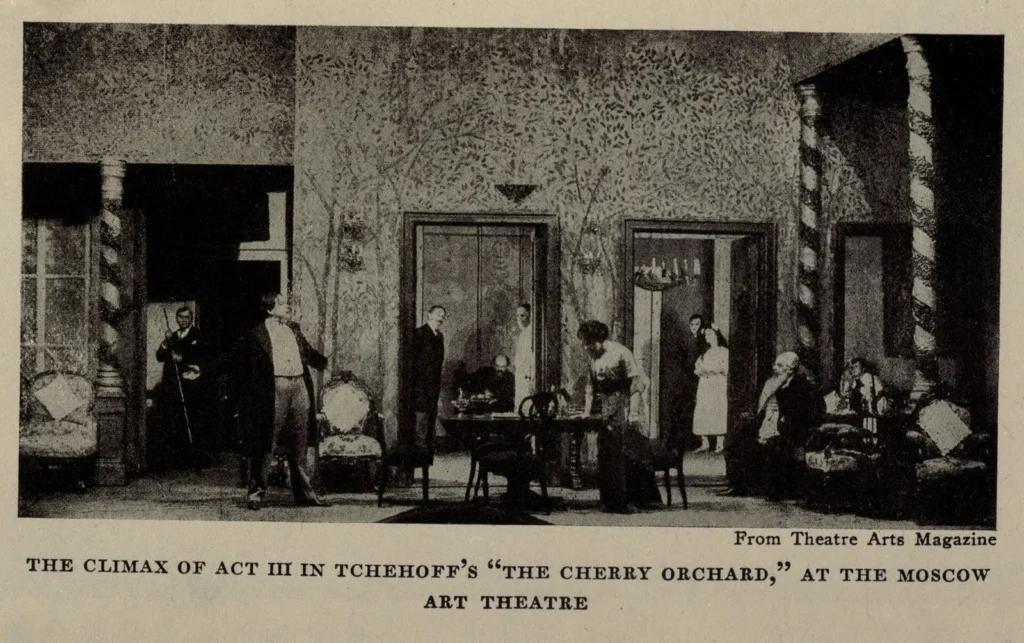
In Paris, for example, André Antoine opened the Théâtre Libre in 1887 and pushed naturalism hard, down to real beef carcasses onstage. He often had sets built with all four walls for rehearsals, then decided which one to take out. In Moscow, Konstantin Stanislavski and Vladimir Nemirovich-Danchenko founded the Moscow Art Theatre in 1898. Their 1904 staging of Chekhov’s The Cherry Orchard built a three-dimensional room. The actors moved through it as if the seats were empty.
What breaking the fourth wall means
Breaking it is any moment when the story admits that someone is watching. There’s more than one way to do that, though, and each one plays differently.
- Direct address. A character looks at the audience or the camera and talks to you.
- The aside. A quick line to the audience or to themselves that, by convention, the other characters don’t hear.
- Metatheater. The play shows you it’s a play. In Luigi Pirandello’s Six Characters in Search of an Author (1921), a company is about to rehearse. Then six characters walk in, looking for someone to finish their story.
- The distancing effect. The production keeps reminding you that you’re in a theater, so you think instead of just feeling.
That last one belongs to Bertolt Brecht, who called it Verfremdungseffekt. The term, usually translated as the alienation or distancing effect, first appeared in his 1936 essay on Chinese acting. Brecht wanted audiences to judge what they saw rather than get swept away. So his productions interrupt the action with songs, captions and actors who speak to the house. He even wrote that the actor never plays as if there were a fourth wall.
Famous fourth wall breaks
In the theater
Shakespeare ends A Midsummer Night’s Dream, written around 1595, with Puck alone onstage. He tells the audience that if the play offended them, they should think of it all as a dream. Then he asks for applause: “Give me your hands, if we be friends.” You can read the whole epilogue in the Folger Shakespeare Library edition.
J. M. Barrie’s Peter Pan opened in London in 1904 and reached Broadway a year later with Maude Adams. In it, Peter begs the audience to clap to save Tinker Bell. American drama has its own classics, too. In Thornton Wilder’s Our Town (1938), the Stage Manager introduces the town and moves the story back and forth in time. Tennessee Williams opens The Glass Menagerie (1944) with Tom telling the audience it’s about to see a memory play.
In movies
Annie Hall (1977) opens with Woody Allen’s Alvy Singer talking straight into the camera. Later, a man in a movie line lectures about Marshall McLuhan. So Alvy pulls the real McLuhan into the frame to set him straight.
In Ferris Bueller’s Day Off (1986), Ferris fakes being sick and walks you through his plan. After the credits, he seems surprised you’re still there and sends you home. Deadpool (2016) takes the device as far as it goes. Wade Wilson tells you his origin story mid-fight. He even jokes about Green Lantern, an earlier flop for his star, Ryan Reynolds.
On TV
Malcolm in the Middle (2000 to 2006) made talking to the camera its trademark, as Malcolm explains his chaotic family. Fleabag (2016 to 2019) turned the device into a relationship. Phoebe Waller-Bridge’s character shares looks and comments with you all the time. In season 2, Andrew Scott’s priest is the only character who notices. He asks her where she just went.
Mockumentaries are a gray area. In The Office (2005 to 2013), the characters talk to a documentary crew that exists inside the story. That’s why their looks to camera don’t always count as a true break.
Why break the fourth wall?
It depends on who breaks it and why. Ferris and Fleabag make you an accomplice, because you know things the other characters don’t. Comedy uses the device to laugh at its own fiction, from Groucho Marx in the 1930s to Deadpool. A narrator like the Stage Manager in Our Town uses it to guide the story and move through time.
Brecht, on the other hand, broke it so audiences would think. In children’s theater, it pulls kids into the action, the way Peter Pan does. Brazilian director Augusto Boal went furthest with Forum Theatre. There, any spectator can stop the scene, step onstage and change it.
How to act with the fourth wall
Onstage
Holding the wall is harder than it looks, because a live audience breathes, coughs and laughs at odd moments. Stanislavski called the state you’re after “public solitude.” Surrounded by people, you focus so hard on the scene that you feel alone. He trained it with circles of attention. You start with a small focus, like an object or your scene partner, and widen from there. Our guide to the Stanislavski method covers its key ideas and exercises.
One rehearsal trick is to furnish the fourth wall. Decide what hangs on it, maybe a window or a painting. Then place it at a fixed point just above the back row. That way, when your character looks out front, you see something specific instead of a sea of faces.
On camera
On set, the lens is the audience, and unless you’re told otherwise, you don’t look into it. In a self-tape, you play to your reader, who sits just beside the camera. Our guide on how to record a self-tape explains the setup. The exception is your slate, where you look right into the lens because you’re introducing yourself, not a character.
Commercials play by other rules. Many spots ask you to talk to camera as if it were one person. Practice that if you’re going after commercial auditions.
So here’s a quick cheat sheet for auditions and shoots.
| Situation | Where you look |
|---|---|
| A realistic play, where the fourth wall stays up | At your partner, or at a fixed point just above the back row |
| A line written for the audience, which brings the wall down | At one specific section of the house |
| A film or TV shoot, where the lens is the audience | At your partner, but into the lens if you’re asked to |
| A self-tape | At your reader, just beside the camera |
| Your slate, when you speak as yourself | Into the lens |
| A commercial that talks to camera | Into the lens, as if it were one person |
How to break it without losing the scene
- Decide who the audience is to your character. An accomplice, a jury or someone you need help from will each change the tone.
- Stay in character. Ferris and Malcolm, for instance, talk to the camera without stepping out of who they are.
- Talk to someone specific. Onstage, pick one section of the house. On camera, think of the lens as one person’s eyes.
- Listen to what comes back. If the audience laughs or answers, react. That’s where your improv skills pay off.
Coming back into the scene takes rehearsal too. To practice with friends, our short plays give you original scripts to work on. Once a scene is ready, browse the open theater casting calls.
Related terms: aside, monologue and soliloquy
An aside is a short line to the audience or to oneself that, by convention, the other characters don’t hear. A monologue is a long speech by one character, aimed at another character, at the audience or inward. Our entry on what a monologue is covers the types. In a soliloquy, the character is alone, or thinks so, and works through a problem out loud. Say it to the house and the wall comes down.
Want to see Brecht’s distancing effect in action? In Five Truths, a project by the V&A and the National Theatre, director Katie Mitchell staged Ophelia’s mad scene from Hamlet five ways. In the Brecht version, for example, Michelle Terry often reports the character in the third person (“and then she sang”). So you watch Ophelia from the outside instead of getting lost in her.

Frequently asked questions
What does breaking the fourth wall mean?
It means a character acknowledges the audience. They talk to it, look at it or pull it into the action. In movies and TV, that usually means looking or speaking straight into the camera.
Who came up with the fourth wall?
The idea goes back to Denis Diderot. In 1758 he told actors to imagine a great wall along the front of the stage, and 19th-century realistic theater made it the norm.
Why is it called the fourth wall?
Because a room onstage shows three walls, the back and the two sides. The fourth is the missing one on the audience’s side, and the actors behave as if it were there.
What movies and TV shows break the fourth wall?
Some of the best known are Annie Hall (1977), Ferris Bueller’s Day Off (1986) and Deadpool (2016). On TV, Malcolm in the Middle and Fleabag built entire series around it.
Is an aside the same as breaking the fourth wall?
It depends on where it goes. A line aimed at the audience breaks it. A line a character says to themselves, though, is often treated as a classic stage convention rather than a break.
Can you look at the camera in an audition?
During your slate, yes, because you’re speaking as yourself. In the scene, only if you’re asked to or the script talks to the viewer. When in doubt, ask before you record.
Reviewed in October 2026.
Books to go deeper
-
An Actor Prepares
Konstantin Stanislavski The foundation of the system: building a character from inner truth, imagination and emotion memory. Most acting schools start here. See it on Amazon -
The Actor and the Target
Declan Donnellan For when you get stuck: Declan Donnellan explains where fear and tension come from and how to put your attention back outside yourself. See it on Amazon -
The Method
Isaac Butler How Stanislavski's ideas made it to Hollywood: from Moscow to the Group Theatre, with Strasberg, Stella Adler and Marlon Brando. See it on Amazon
Each book takes you to Buscalibre or Amazon, depending on your country. Some of these are affiliate links: if you buy through them, Casting and Acting may earn a commission at no extra cost to you. As an Amazon Associate, Casting and Acting earns from qualifying purchases.
What did you think?



Comments
Join the conversation
Create a free account or log in to comment and earn +15 XP.