

In this article
- Acting schools in Mexico City
- Centro Universitario de Teatro (CUT), UNAM
- Escuela Nacional de Arte Teatral (ENAT), INBAL
- CasAzul
- La Casa del Teatro
- TelevisaUnivision’s CEA
- TV Azteca’s CEFAT
- Instituto Andrés Soler (ANDA)
- Escuelas de Iniciación Artística (EIA), INBAL
- Acting schools outside Mexico City
- Facultad de Teatro, Universidad Veracruzana (Xalapa)
- Bachelor’s degree in acting, UAQ (Querétaro)
- Facultad de Artes Escénicas, UANL (Monterrey)
- Universidad de Guadalajara (CUAAD)
- CEDART, INBAL (Guadalajara and Monterrey)
- Comparison of acting schools in Mexico
- How admission works at acting schools in Mexico
- Degree, program or workshop: which one is right for you
- After school: auditions in Mexico
- Frequently asked questions about acting schools in Mexico
- What are the best acting schools in Mexico?
- How much do acting schools in Mexico cost?
- Are there free acting schools in Mexico?
- How old do you have to be to get into Televisa’s CEA?
- Can you study acting without finishing high school?
- What do acting schools ask for at the audition?
Quick answer: the best-known acting schools in Mexico are in Mexico City. For a public bachelor’s degree, look at UNAM’s CUT and the INBAL’s ENAT. CasAzul and La Casa del Teatro are officially accredited private schools, and the TV networks run the CEA (free) and the CEFAT. Outside the capital, public universities in Xalapa, Querétaro, Monterrey and Guadalajara offer degrees. Private tuition runs about MXN 6,500 to 14,600 a month.
Where you study depends on what you’re looking for. It might be a university degree, training close to the TV industry or a workshop to begin with. Below are the options we verified on each school’s official website and admission calls, with what they cost and how admission works.
Before you start, keep the calendar in mind. Most 2026 admission processes have already closed, so if you start preparing now, you’re aiming for the 2027 cycle. The exception is CasAzul’s call for applications, which closes on November 13, 2026. The CEA’s in-person round was on Saturday, October 31, 2026.
Acting schools in Mexico City
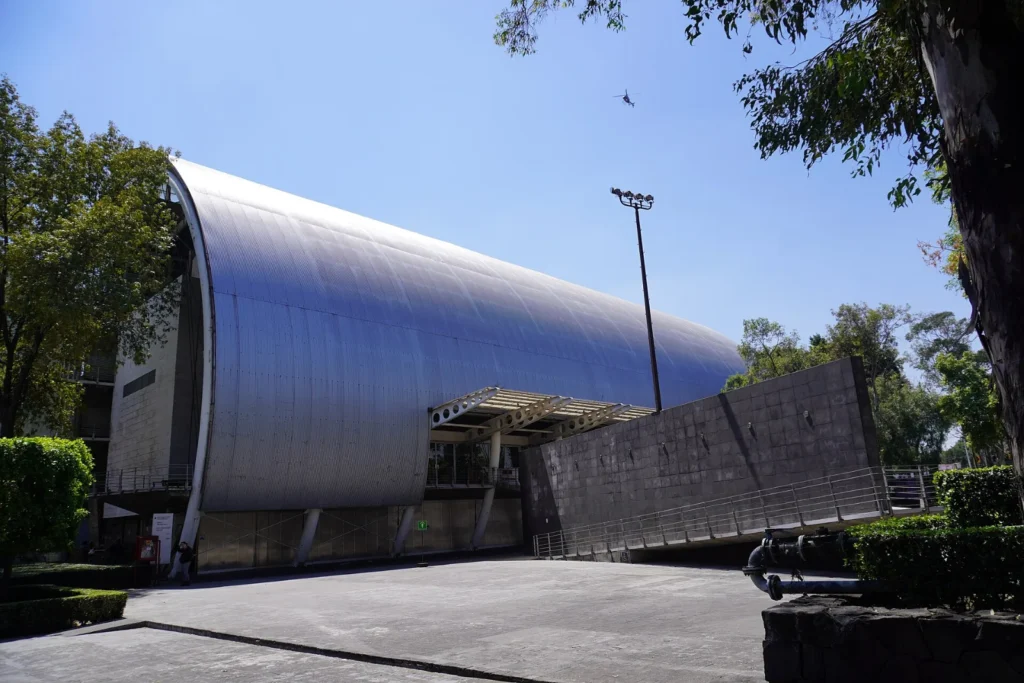
Centro Universitario de Teatro (CUT), UNAM
The CUT, founded on June 18, 1962, offers the Licenciatura en Teatro y Actuación at Ciudad Universitaria, UNAM’s main campus. It’s an eight-semester bachelor’s degree in theater and acting. To get in, you first need admission to UNAM. That can come through its entrance exam (concurso de selección), the pase reglamentado (direct admission for students from UNAM’s own high schools) or as a second degree. Then you have to pass a two-stage internal process. The first stage is an individual audition with a monologue and a song, and the second is group work on acting, body and voice. The process then ends with a preparatory course (curso propedéutico).
So what do they look for? The CUT’s call for the 2026-2027 school year explains it. The individual audition assesses your level as a performer, along with your articulation, your memory and your attitude during the audition itself. Then, in the second stage, applicants work in groups. The acting teachers watch for attention, presence, energy and how you relate to the space and to other people. Body and movement looks at rhythm, coordination, flexibility and stamina, while the vocal test checks pitch and listening skills.
For the 2026-27 school year, the stages ran from July 28 to 30 and from August 3 to 5. The preparatory course followed on August 7 and from August 10 to 13. Finally, the list of accepted students came out on August 17. The CUT publishes its call in January, along with UNAM’s. The internal process costs MXN 500, and when you enroll you’ll also need a medical certificate with a stress test and a vocal cord exam. It’s all in the CUT’s call for applications.
Escuela Nacional de Arte Teatral (ENAT), INBAL
The ENAT is the theater school of the Instituto Nacional de Bellas Artes y Literatura (INBAL), at the Centro Nacional de las Artes (National Arts Center) in Coyoacán. It was founded on July 15, 1946, as the Escuela de Arte Teatral. Today it offers the Licenciatura en Actuación, a bachelor’s degree in acting that lasts eight semesters according to its 2020 call. The INBAL also names Ignacio López Tarso, Luisa Huertas and Ángeles Cruz among its graduates.
Admission has two stages, and you need a high school diploma (bachillerato) with a minimum average of 7 out of 10. For the 2026-27 school year, first-stage results came out on June 26 and the list of admitted students on August 11. Enrollment then took place on August 13 and 14. In the 2020 call, the first stage was the EXANI-II, Mexico’s standard university admission test. The second stage then assessed movement, voice, singing and an interview. Calls appear on the INBAL admissions website.
CasAzul
CasAzul, from the production company Argos, is a private school in the San Ángel Inn neighborhood. It turns 25 in 2026 and opened a new campus in July of that year. Its six-semester bachelor’s degree in acting (Licenciatura en Actuación) has official accreditation, RVOE 20261172. The RVOE is the official accreditation from Mexico’s Ministry of Education (SEP). Its brochure names Luis Gerardo Méndez, Eréndira Ibarra and Horacio García Rojas among its graduates. The school also has a scholarship agreement with the Vancouver Film School.
Admission is by audition and interview, followed by a preparatory course and a psychometric test. The call to start in January 2027 closes on November 13, 2026. As for costs, the audition is MXN 2,500 and the preparatory course MXN 3,500. Tuition runs MXN 14,600 a month, ten months a year, although scholarships are available. CasAzul also offers the Semestre Cero (Semester Zero), a 16-week program for people ages 17 to 25 (MXN 3,680 plus MXN 8,700 a month). For something shorter, there’s a 16-hour on-camera acting workshop (MXN 5,900). Details are on the degree page.
La Casa del Teatro
La Casa del Teatro is a civil association (asociación civil) in Coyoacán, founded in 1991. Since 1994, it has offered a four-year bachelor’s degree in acting with official SEP accreditation (RVOE 20081603). To get in, you have to be over 18 and have finished prepa (high school). The process has four stages. First come documents and a questionnaire, then a knowledge test and a psychometric test. After that, there’s an interview and a voice exam (examen foniátrico), and finally a two-week preparatory course for up to 30 people. Since 2023, it has opened a new class every two years.
In the 2026 cycle, the annual enrollment fee was MXN 10,000 plus 12 monthly payments of MXN 12,500. Applicants also paid for the admission process in stages (MXN 2,100, MXN 600 and MXN 3,000). If you’d rather start with something shorter, there are beginner workshops for adults that last about ten weeks, with four cycles a year (MXN 5,500). Teens ages 13 to 17 who attend public school also have a free workshop. You’ll find the rest on the degree page.
TelevisaUnivision’s CEA
The Centro de Educación Artística (CEA) has operated at Televisa San Ángel, TelevisaUnivision’s studios in Mexico City, since 1978. It’s acting training, not a bachelor’s degree, and it’s free, although students pay for their own materials and living expenses. According to the news outlet N+, the training lasts three years and is open to applicants from other countries.
The 2026 youth call is for people ages 17 to 23. The first screening was by video until October 16. After that came an in-person round on Saturday, October 31, 2026, from 9 a.m. to 1 p.m. at Televisa San Ángel. Applicants had to bring two printed photos and ID. The CEA then calls those who pass to an audition before November 13. You’ll find the details in the call published by Las Estrellas, a TelevisaUnivision channel. And if a future call asks you for a video, our guide on how to record a self-tape will help.
TV Azteca’s CEFAT
The CEFAT (formerly CEFAC) is TV Azteca’s school, in Coyoacán. According to its FAQ, the acting program lasts two years, but it doesn’t have official SEP accreditation. Admission is by interview and audition, for people ages 17 to 30 who have finished high school or are about to. The website estimates about MXN 13,000 a month. It also makes clear that the school offers no scholarships and doesn’t guarantee work in television. Among its graduates, it names Silvia Navarro, Bárbara Mori, Marimar Vega and Juan Pablo Medina.
Instituto Andrés Soler (ANDA)
The school of the Asociación Nacional de Actores (ANDA), Mexico’s actors’ union, opened on June 11, 1951, in the Narvarte neighborhood. Its founders were the Soler family, Jorge Negrete and Rodolfo Landa. It offers a six-semester professional program in dramatic arts (Carrera Profesional en Arte Dramático) that leads to a diploma. There’s also a two-and-a-half-year Saturday diploma course (diplomado) and a 72-hour introductory workshop. You have to be over 15 and have finished high school or be about to. Among its graduates, it lists Verónica Castro, Daniela Romo and Tenoch Huerta.
The 2025 call is still the latest one online. At its prices, the program cost MXN 6,500 to enroll and MXN 6,500 a month, while the workshop cost MXN 950 plus MXN 1,850 a month. See the program page for more.
Escuelas de Iniciación Artística (EIA), INBAL
Want to start without enrolling in a bachelor’s degree? The INBAL’s four Escuelas de Iniciación Artística (introductory arts schools) have a three-year theater program with a certificate. It’s for adults 18 and older at EIA 1, 3 and 4, and for children ages 8 to 11 at EIA 2. The schools are in Roma Sur, Doctores, Gustavo A. Madero and the Centro (downtown). Enrollment for 2026-27 ran from August 3 to 7. For more, visit the EIA website.
Acting schools outside Mexico City
Facultad de Teatro, Universidad Veracruzana (Xalapa)
The Facultad de Teatro (School of Theater) of the Universidad Veracruzana (UV) was founded in 1976. It bills itself as the first bachelor’s degree in acting in Ibero-America (Latin America, Spain and Portugal). Its bachelor’s degree in theater (Licenciatura en Teatro) takes seven to nine semesters. In the 2026 admissions, the EXANI-II counted for 20% and a complementary exam for 80% (an interview and an assessment in five areas). Applicants also filled out the online questionnaire from March 23 to April 30. The school’s website has the details.
Bachelor’s degree in acting, UAQ (Querétaro)
The Universidad Autónoma de Querétaro (UAQ) has an eight-semester bachelor’s degree in acting (Licenciatura en Actuación) with far more demand than places. It accepts up to 200 applicants into its selection workshop, yet it has only 40 spots. In 2026, the interviews and the workshop ran from March 30 to April 11. Passing the workshop then qualified you to take the EXCOBA, the university’s general admission exam. The selection workshop costs MXN 5,000, nonrefundable, while enrollment is MXN 1,620 per semester. Check the degree page for updates.
Facultad de Artes Escénicas, UANL (Monterrey)
The UANL (Universidad Autónoma de Nuevo León) runs a Facultad de Artes Escénicas (School of Performing Arts). It offers a ten-semester bachelor’s degree in theater arts (Licenciatura en Arte Teatral), with a single intake per year. CAESA, Mexico’s accreditation council for university arts programs, has accredited it since August 5, 2024. To get in, you have to pass the university’s entrance exam, a practical exam in front of teachers and a preparatory course with at least 80% attendance. For kids, the school also has children’s theater and dance workshops on Saturdays from 9 a.m. to 1 p.m. In 2026, enrollment for them ran from February 2 to 14 and cost MXN 4,200. More on the degree page.
Universidad de Guadalajara (CUAAD)
The Universidad de Guadalajara (UdeG) offers the Licenciatura en Artes Escénicas para la Expresión Teatral (Performing Arts for Theatrical Expression) at its CUAAD (Centro Universitario de Arte, Arquitectura y Diseño). It’s an eight-semester degree with three tracks: acting, staging and production. According to its admissions guide, registration is in September or February, depending on the admission calendar. Next comes the Prueba de Aptitud Académica (an academic aptitude test), followed by a medical assessment with an electrocardiogram and an artistic diagnostic evaluation. If you don’t finish the degree, you can still graduate as a Técnico Superior Universitario, a technical-level university qualification. The degree page has more.
CEDART, INBAL (Guadalajara and Monterrey)
The INBAL’s CEDART arts education centers José Clemente Orozco in Guadalajara and Alfonso Reyes in Monterrey take students who have finished secundaria (middle school). They offer the Profesional Medio en Arte Teatral, a mid-level professional program in theater arts. It lasts eight semesters, with classes in the afternoons and an annual call from the INBAL.
Comparison of acting schools in Mexico
| School | City | Program | Length | Published cost |
|---|---|---|---|---|
| CUT, UNAM | Mexico City | Bachelor’s in Theater and Acting | 8 semesters | MXN 500 for the internal process |
| ENAT, INBAL | Mexico City | Bachelor’s in Acting | 8 semesters | Not published |
| CasAzul | Mexico City | Bachelor’s in Acting | 6 semesters | MXN 14,600 a month, with scholarships |
| La Casa del Teatro | Mexico City | Bachelor’s in Acting | 4 years | MXN 12,500 a month plus MXN 10,000 enrollment |
| CEA, TelevisaUnivision | Mexico City | Acting training | 3 years | Free |
| CEFAT, TV Azteca | Mexico City | Acting program without SEP accreditation | 2 years | About MXN 13,000 a month |
| Instituto Andrés Soler | Mexico City | Program in Dramatic Arts, with a diploma | 6 semesters | MXN 6,500 a month (2025) |
| EIA, INBAL | Mexico City | Introductory theater program | 3 years | Not published |
| Universidad Veracruzana | Xalapa | Bachelor’s in Theater | 7 to 9 semesters | Not published |
| UAQ | Querétaro | Bachelor’s in Acting | 8 semesters | MXN 1,620 per semester |
| UANL | Monterrey | Bachelor’s in Theater Arts | 10 semesters | Not published |
| UdeG | Guadalajara | Bachelor’s in Performing Arts | 8 semesters | Not published |
| CEDART, INBAL | Guadalajara and Monterrey | Mid-level professional program in theater arts | 8 semesters | Not published |
How admission works at acting schools in Mexico
Public bachelor’s degrees have two filters. First comes the university’s general exam, which can be UNAM’s entrance exam, the EXANI-II or the EXCOBA. Then there’s an artistic test, such as an audition, a practical exam or a preparatory course. That’s how it works at the CUT, the UV, the UANL, the UdeG and the UAQ.
For the artistic part, it helps to come prepared.
- A monologue of one to two minutes that suits you. Our guide to short monologues for auditions has six original ones to practice with.
- A song, because some schools, such as the CUT, ask for one at the audition.
- Your medical tests, since the CUT, the UdeG and La Casa del Teatro ask for medical or voice exams.
Timing matters too. Public schools open their calls between January and August. UNAM publishes its call in January, and the CUT selects students in July and August. The UV and the UAQ hold their assessments in March and April, while the ENAT runs its process from June to August. Private schools take applicants later. CasAzul accepts them until November 13, 2026, and the CEA held its in-person round on October 31, 2026.
Degree, program or workshop: which one is right for you
If you want a degree with official recognition, ask about the school’s RVOE (Reconocimiento de Validez Oficial de Estudios) from the SEP. CasAzul and La Casa del Teatro publish theirs. The CEFAT, on the other hand, makes clear that its program doesn’t have one, and the Instituto Andrés Soler awards a diploma.
Still not sure acting is for you? Start with something short, such as La Casa del Teatro’s beginner workshops (about ten weeks), CasAzul’s on-camera workshop (16 hours) or the INBAL’s Escuelas de Iniciación Artística. And if you’re wondering whether you need to study at all to work as an actor, read do you need acting school to become an actor?
If voice work is what draws you, Mexico also has schools that focus on dubbing, most of them in Mexico City. We list them in our guide to dubbing schools in Mexico.
After school: auditions in Mexico
When you want to gain experience, check the open casting calls in Mexico, with a separate page for Mexico City. Our guide to getting auditions in Mexico also lists the country’s casting and representation agencies.
Frequently asked questions about acting schools in Mexico
What are the best acting schools in Mexico?
It depends on what you’re looking for. For a public bachelor’s degree, UNAM’s CUT and the INBAL’s ENAT have the strongest reputations, and both have demanding admissions. Officially accredited private schools include CasAzul and La Casa del Teatro. To train close to television, there’s TelevisaUnivision’s CEA, which is free, and TV Azteca’s CEFAT.
How much do acting schools in Mexico cost?
Public schools cost little. The CUT’s internal process is MXN 500, for example, and the UAQ charges MXN 1,620 per semester for enrollment. At private schools, published monthly fees range from about MXN 6,500 (Andrés Soler, at 2025 prices) to MXN 14,600 (CasAzul), plus enrollment and the admission process.
Are there free acting schools in Mexico?
Yes. TelevisaUnivision’s CEA is free, although you pay for your own materials and living expenses. La Casa del Teatro also has a free workshop for public school students ages 13 to 17. Public bachelor’s degrees, meanwhile, charge low fees, such as the UAQ’s MXN 1,620 per semester.
How old do you have to be to get into Televisa’s CEA?
For the 2026 youth call, you have to be 17 to 23. The first filter is a video or an in-person round (the 2026 one was on October 31). Then the CEA calls those who pass to an audition.
Can you study acting without finishing high school?
At some schools, yes. You can attend the INBAL’s CEDART once you’ve finished secundaria. The Instituto Andrés Soler also accepts people over 15 who are still finishing high school, and the CEFAT takes people ages 17 to 30 who have finished high school or are about to. For a bachelor’s degree, however, you need to have finished high school (bachillerato).
What do acting schools ask for at the audition?
The most common request is a monologue and sometimes a song, plus group work on body and voice. The CUT, for example, asks for a monologue and a song in the individual audition. Some schools add an interview, a psychometric test and medical or voice exams.
Reviewed in October 2026.
Books to go deeper
-
An Actor Prepares
Konstantin Stanislavski The foundation of the system: building a character from inner truth, imagination and emotion memory. Most acting schools start here. See it on Amazon -
The Actor and the Target
Declan Donnellan For when you get stuck: Declan Donnellan explains where fear and tension come from and how to put your attention back outside yourself. See it on Amazon -
Improvisation for the Theater
Viola Spolin The theater games behind modern improv, used from Chicago comedy stages to drama classrooms. Works for kids, teens and adults. See it on Amazon
Each book takes you to Buscalibre or Amazon, depending on your country. Some of these are affiliate links: if you buy through them, Casting and Acting may earn a commission at no extra cost to you. As an Amazon Associate, Casting and Acting earns from qualifying purchases.
What did you think?



Comments
Join the conversation
Create a free account or log in to comment and earn +15 XP.