
In this article
- What is method acting?
- Where method acting comes from
- How method acting works, tool by tool
- Relaxation
- Concentration and sense memory
- Affective memory
- Private Moment, Animal and other exercises
- What a Method acting class looks like
- Method acting vs. Stanislavski, Adler and Meisner
- Adler, Meisner and the fight over memory
- Famous actors who trained in method acting
- Criticism and risks of method acting
- Staying in character, the myth Strasberg rejected
- The emotional cost
- How to practice method acting safely
- Train with a teacher, and set your limits
- Step out of the role when you finish
- Ask for help when something stays with you
- Where to study method acting today
- Frequently asked questions
Quick answer: Method acting is Lee Strasberg’s American version of Stanislavski’s system. It trains you to relax, concentrate and use sense memory and affective memory, so your own experience feeds the character’s inner life. The work happens in class and rehearsal. Living as the character off set is a popular myth, and Strasberg himself opposed it.
You’ve probably heard the stories. Robert De Niro gained 60 pounds to play boxer Jake LaMotta in Raging Bull. Daniel Day-Lewis stayed in character, on set and off, while filming Lincoln. Both examples appear in an NPR interview with Isaac Butler, author of a history of the Method. For many people, that’s what method acting means. The real story starts in a classroom, and it’s much less extreme. If you’re new to all this, read our guide on how to become an actor first.
What is method acting?
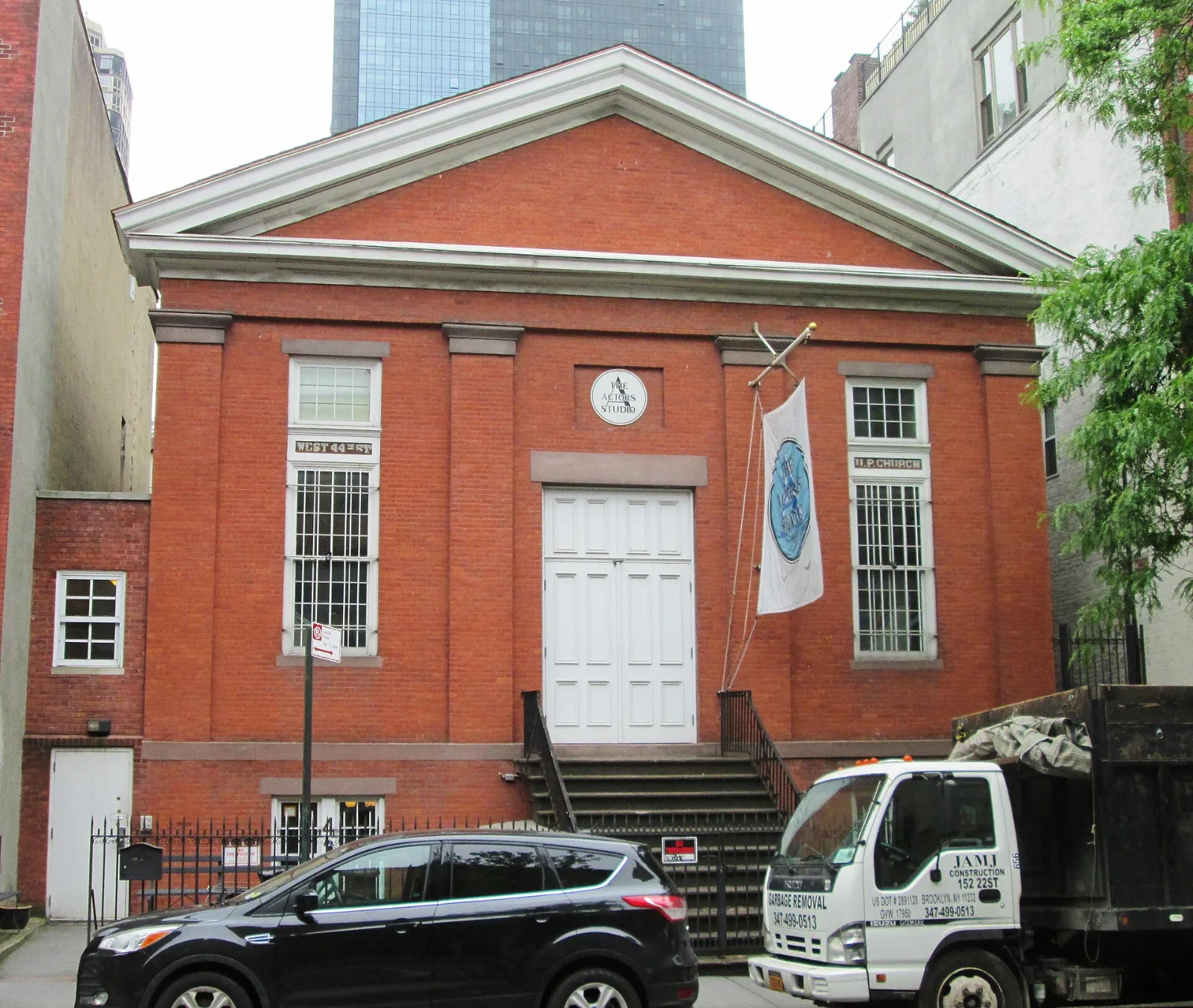
Method acting, or simply the Method, is the approach to actor training that Lee Strasberg built in New York. He started with the Group Theatre in the 1930s and refined it for decades at the Actors Studio. The Lee Strasberg Theatre & Film Institute has a short definition. It calls the Method a systematic way to train the actor’s “instrument” and to prepare a role. Your instrument is you: your body, your senses, your mind and your feelings.
The idea is simple to state and hard to master. You use your own life, through your senses and memories, to fire your imagination. That way, what your character does on stage becomes real behavior, happening to you in the moment. Strasberg summed it up in a line the school still quotes.
“Method acting is what all actors have always done whenever they acted well.”
Source: Lee Strasberg Theatre & Film Institute, “History.”
He didn’t mean that only his students could act. Great actors, in his view, had always worked this way by instinct, and he wanted a reliable way to train it. In the US, “the Method” with a capital M usually means his version. A “method actor” is someone who studied it. Today, though, the press often uses the label for any actor who transforms for a role.
Where method acting comes from
The story starts in 1923, when Stanislavski’s Moscow Art Theatre toured the US. Strasberg, then a young actor, sat in the audience, and the company’s truthful, effortless acting stunned him. Two of its actors, Richard Boleslavsky and Maria Ouspenskaya, stayed in New York and opened the American Laboratory Theatre. Strasberg studied there, and so did Stella Adler. Our guide to the Stanislavski method covers the Russian side of the story.
In 1931 Strasberg, Harold Clurman and Cheryl Crawford gathered 28 actors and founded the Group Theatre. Stella Adler, Sanford Meisner and Elia Kazan were all part of it. Strasberg trained the company with sensory exercises, relaxation, script analysis and improvisation. According to the Stella Adler Studio, he called it “my method of acting,” and later simply “the Method.”
After the Group broke up, Elia Kazan, Cheryl Crawford and Robert Lewis founded the Actors Studio in 1947. Strasberg joined in 1948 and became artistic director in 1951, a post he held until his death in 1982. The Studio’s own history calls it “the home of method acting.” In 1969, he and his wife Anna opened the institute that carries his name, to reach a wider public. Late in life he even acted on screen, earning an Oscar nomination as Hyman Roth in The Godfather Part II.
How method acting works, tool by tool
Strasberg’s Method rests on a few connected skills. You build them step by step, since each one prepares the next.
Relaxation
Everything starts here. You hunt down the tension you carry without noticing, maybe in your jaw or your shoulders, and you let it go. In Strasberg’s view, mental and physical tension restricts expression. At the Strasberg Institute, students practice relaxation in every class until they can release tension at will. Later in life, Strasberg also added unusual movements and sounds to the exercise.
Concentration and sense memory
Sense memory comes next. You recreate a simple object or sensation with your five senses, while your hands stay empty. For example, you might rebuild the weight and heat of a coffee mug, or the sun on your face. Over time, the exercises grow more complex and more emotionally charged. They also train concentration, because they give you something real to focus on instead of the audience or the camera. If nerves get in your way, our guide to stage fright has more tools.
Affective memory
This is the best-known tool and the most debated one. Strasberg asked actors to recall an intense moment from their own past, in sensory detail, and use the feelings it brought back in a scene. The Institute describes the classic version as reliving a “once in a lifetime” event so you can reach an explosive moment at will. For Strasberg, recreating an emotion on stage wasn’t enough. You had to relive it.
The term goes back to Stanislavski, who borrowed it from the French psychologist Théodule Ribot. Strasberg, however, put it at the center of his training, and that choice started a long fight, as you’ll see below.
Private Moment, Animal and other exercises
At the Actors Studio, Strasberg developed exercises aimed at the personal habits that make actors hold back. The best known are Private Moment and Song and Dance. In the Animal exercise, you physically recreate an animal’s behavior and then bring it into a human character. You’ll also hear about the Place, the Personal Object and the Emotional Memory exercises, all part of the sequence Strasberg kept refining in the 1960s and 1970s.
What a Method acting class looks like
At the Strasberg Institute in New York, Method Acting classes are the core of the program. Each student takes two of them per term, with two different teachers. A class lasts four hours and comes in two halves, according to the school’s class descriptions. “Work on the self” uses relaxation and sensory exercises to build concentration. Then “work on the character” applies those exercises to scenes.
Electives build on that base. A character class, for example, uses the Animal exercise, a Need exercise and a Private Moment for the character, along with improvisation. Having a trained teacher in the room matters most once the exercises turn emotional. To practice scene work on your own, try one of these dramatic monologues.
Method acting vs. Stanislavski, Adler and Meisner
All four approaches chase truthful behavior. Where they split is the source of emotion. Here’s a simplified map, since many teachers mix tools from several schools.
| Approach | Where emotion comes from | Signature tool | Where it took shape |
|---|---|---|---|
| Strasberg’s Method | Your own senses and memories | Relaxation, sense memory and affective memory | Group Theatre and the Actors Studio, New York |
| Late Stanislavski | Action inside the given circumstances | Magic if and physical actions | Moscow Art Theatre and its studios |
| Stella Adler | Imagination and the script | Script analysis and given circumstances | Her New York studio, opened in 1949 |
| Sanford Meisner | Truthful reactions to your partner | The repetition exercise | Neighborhood Playhouse, New York, from 1935 |
Adler, Meisner and the fight over memory
The split goes back to 1934. Adler spent five weeks working with Stanislavski in Paris and came back to the Group with a new understanding of his work. Her studio’s history says she was uncomfortable with Strasberg’s way of working. She began teaching other members herself, and in 1949 she opened her own school. As PBS’s American Masters puts it, her teaching grew from the idea that “the theater exists 99% in the imagination.”
The Strasberg camp reads the history differently. Its institute quotes a 1937 letter in which Stanislavski called it “untrue” that he had given up the memory of feelings. So the argument over affective memory is still alive, almost a century later.
Sanford Meisner, another Group member, took a third road. He joined the Neighborhood Playhouse in 1935 and developed his technique there. Instead of your own past, it puts your attention on the other person, so you respond truthfully to what they actually do. If you’re choosing a teacher, ask which of these traditions they work in. Our guide on how to choose acting classes lists the other questions worth asking.
Famous actors who trained in method acting
The Actors Studio’s list of notable members reads like a film history class. It includes James Dean, Marilyn Monroe, Paul Newman, Jane Fonda, Ellen Burstyn, Dustin Hoffman and Robert De Niro. The Strasberg Institute adds Al Pacino to its own list of Method actors. Butler, for his part, calls Pacino’s work in The Godfather perhaps the purest example of the technique.
Marlon Brando is the tricky case. He appears on the Actors Studio list, and the publisher’s description of Strasberg’s book A Dream of Passion names him among Strasberg’s actors. Yet PBS lists both Brando and De Niro among the students of Stella Adler’s conservatory. Many actors trained with more than one teacher. So before you call someone a method actor, check who actually taught them.
Criticism and risks of method acting
Staying in character, the myth Strasberg rejected
This is the biggest misunderstanding. In Butler’s account, Method actors on film sets faced a practical problem. How do you switch it on the moment someone calls “action”? One answer was to never break character at all. “That is not what Strasberg taught,” Butler told NPR, adding that Strasberg strongly opposed it.
The habit spread after De Niro won the 1981 Oscar for Raging Bull. According to Butler, stories of extreme preparation then became part of the publicity and awards campaigns around acting. The Strasberg Institute goes further. It calls the image of an actor who mystically “becomes” the character, or lives it in real life, a cliché.
The emotional cost
Affective memory sends you back to real moments, sometimes painful ones, and that’s where most of the criticism lands. Reliving a loss again and again, in class and then night after night in a run, can leave you drained. It can also stir up things a scene was never meant to heal. Adler and Meisner, for their part, built their techniques on imagination and on the scene partner instead.
Acting itself can be hard to shake off, whatever your technique. In a University of Sydney study of 782 actors, about 40 percent had trouble relaxing or letting go after an emotionally and physically demanding role. The authors asked drama schools and theaters to build in structured cool-down time after performances, just as actors already warm up before them.
How to practice method acting safely
Used with care, the Method’s tools can deepen your work. These habits help keep it that way.
Train with a teacher, and set your limits
Emotional exercises need someone in the room who knows when to push and when to stop. So ask any teacher how they handle an exercise that goes too far. If you draw on your own past, pick memories you can already look at with some distance, never a fresh wound. You can also pause or stop any exercise. Imagination works too, and our guide on how to cry on command covers gentler routes to emotion, like specific images and breath.
Step out of the role when you finish
Drama therapists call this de-roling. A Kansas State University release describes it as taking a role off after rehearsal so you can come back to yourself. Simple versions include shaking out your arms and legs, or handing a prop or costume piece back to the director as a small ritual. Sally Bailey, then head of the school’s drama therapy program, noted that actors spend years learning to get into a role. Yet “they’re never taught techniques about getting out of it.”
Build your own exit routine and use it every time. Change clothes, wash your face, drink some water or say your own name out loud. Moving in a way your character never would also helps, and so do a few improv games with your group. For more body-based tools, see our guide to physical acting.
Ask for help when something stays with you
Sometimes a role or an exercise leaves you anxious for days, keeps you up at night or brings back a painful memory. If that happens, talk to your teacher or someone you trust. If it doesn’t ease, see a mental health professional. In the US, the Entertainment Community Fund offers mental health support to people who work in performing arts and entertainment, from counseling to referrals.
Where to study method acting today
The Lee Strasberg Theatre & Film Institute has campuses in New York and Los Angeles, with conservatories, shorter programs and intensives. Our guides to acting classes in NYC and acting classes in Los Angeles cover both campuses. If you also speak Spanish, the LA campus runs a two-week intensive in Spanish.
The Actors Studio works differently. As its FAQ explains, it doesn’t sell classes. Actors earn a free lifetime membership by passing a series of auditions, then work on scenes in private, a bit like athletes at a gym. If you want a degree, the Studio partners with Pace University on a three-year MFA at the Actors Studio Drama School, in acting, directing or playwriting.
Want a look inside the training? In this short video from the Institute’s New York campus, teachers, alumni and co-founder Anna Strasberg talk about the Method, with glimpses of students at work.

Frequently asked questions
Is method acting the same as staying in character?
Not in Strasberg’s version. His Method is training for class and rehearsal. Staying in character on and off set caught on later, and according to author Isaac Butler, Strasberg strongly opposed it.
Who are some famous method actors?
The Actors Studio counts James Dean, Marilyn Monroe, Paul Newman, Jane Fonda and Robert De Niro among its notable members. Al Pacino is another classic example. People still argue about Marlon Brando, since he also studied with Stella Adler.
Is method acting dangerous?
It can be demanding, especially affective memory, which draws on painful moments from your own life. A trained teacher, clear limits and an exit routine after each session make it safer. If something stays with you, ask for help.
Can you learn method acting on your own?
You can practice relaxation and simple sense memory exercises at home. Leave the emotional memory work for class, though, with a teacher who can guide you and stop the exercise when needed.
How is method acting different from the Stanislavski method?
Method acting grew out of Stanislavski’s system. Strasberg put relaxation, sense memory and affective memory at the center. Late Stanislavski, as Adler reported, reached emotion mainly through imagination and physical action.
Reviewed in November 2026.
Books to go deeper
-
A Challenge for the Actor
Uta Hagen Hands-on exercises for being present on stage (objectives, given circumstances, substitution) from one of New York's great teachers. See it on Amazon -
The Actor and the Target
Declan Donnellan For when you get stuck: Declan Donnellan explains where fear and tension come from and how to put your attention back outside yourself. See it on Amazon -
Respect for Acting
Uta Hagen Uta Hagen's first book: identity, substitution, objects and the idea that acting is a craft you train every day. See it on Amazon
Each book takes you to Buscalibre or Amazon, depending on your country. Some of these are affiliate links: if you buy through them, Casting and Acting may earn a commission at no extra cost to you. As an Amazon Associate, Casting and Acting earns from qualifying purchases.
What did you think?




Comments
Join the conversation
Create a free account or log in to comment and earn +15 XP.