
In this article
- Start with your goal, not with a school
- Types of acting classes you will run into
- Scene study and technique
- On-camera and audition classes
- Improv, voice and movement
- Musical theatre, kids and teens
- Conservatories, ongoing classes and workshops
- How to match acting classes to your level
- How to evaluate a teacher and a studio
- In-person or online acting classes
- Free acting classes: what to expect
- Red flags that signal a scam
- Where to find acting classes in the United States
- If you are a Spanish speaker
- Frequently asked questions
Quick answer: Choose acting classes by matching them to your goal and level. Beginners need scene study and basic technique, while working actors often add on-camera or audition classes. Audit a session first, check who teaches and how big the group is, and avoid any studio that guarantees an agent, a role or a result.
Search for acting classes and you will find hundreds of options, from a community theater workshop to a full-time conservatory. Some are excellent. Others exist mainly to sell you something. This guide helps you sort them out before you pay for anything.
Start with your goal, not with a school
Most people begin by typing “acting classes near me” and clicking the first studio with a nice website. That is backwards. First decide what you want from the next six months, because the right class for a nervous beginner is the wrong class for someone with an audition next week.
Ask yourself three questions. Do you want to act for fun, build confidence, or work professionally? Do you aim at stage, film and television, or both? And how much time can you give each week, including homework and rehearsal outside class?
If you are still unsure that acting is for you, read our note on whether you have acting talent first. A cheap introductory session will teach you more than any quiz.
Types of acting classes you will run into
Scene study and technique
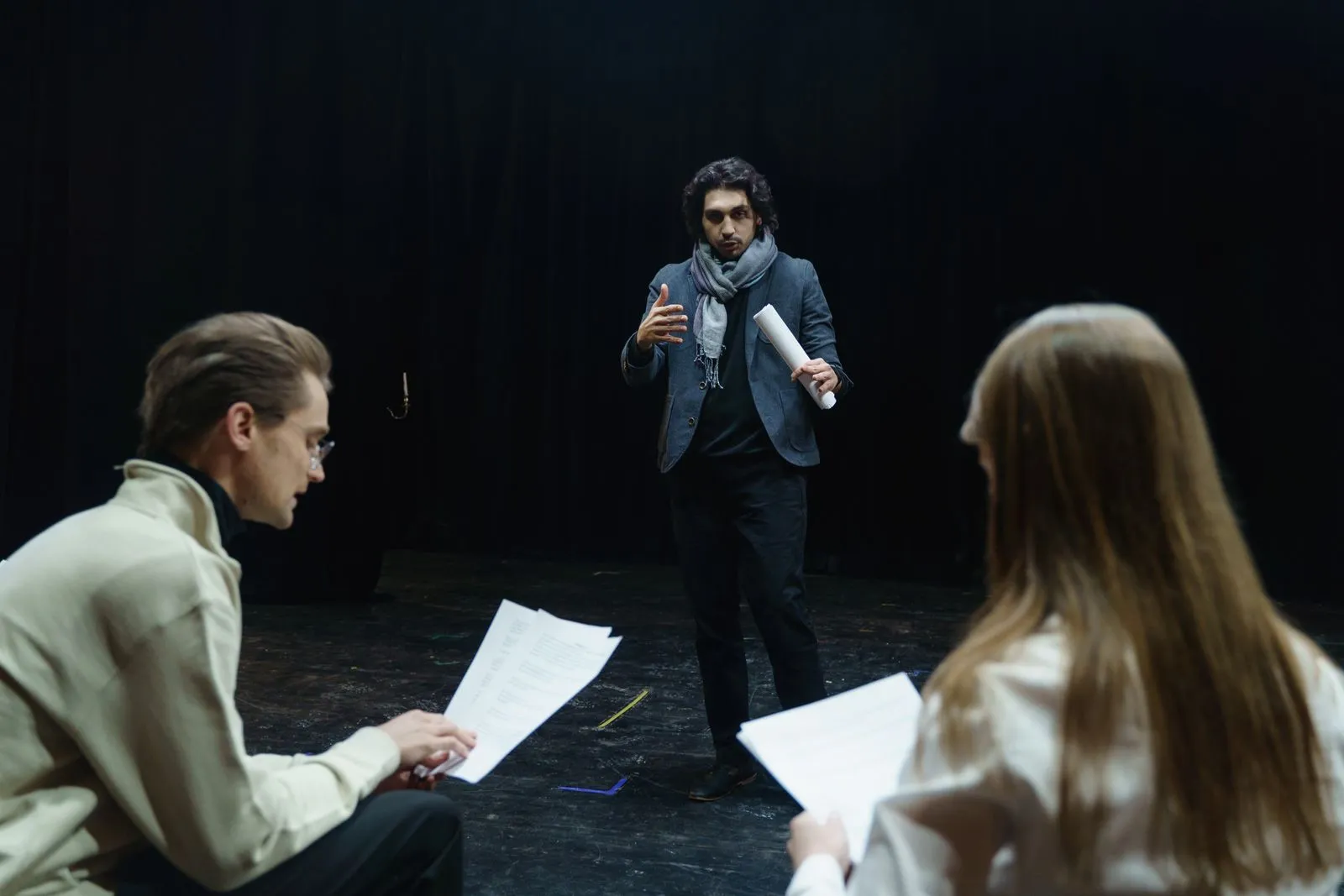
This is the core of most programs. You work on scenes from plays and screenplays with a partner, and the teacher gives notes on what you did. The approach depends on the technique the teacher follows.
- Meisner: repetition exercises that train you to listen and react to your partner instead of planning your performance.
- Stanislavski-based work: objectives, obstacles and given circumstances. Our guide to the Stanislavski method explains the basics.
- Uta Hagen: a focus on specific, real details of the character’s life and on substitution.
- Michael Chekhov: imagination, physical gesture and the psychological body.
Many teachers mix several of these. That is normal. What matters is that the teacher can explain their approach in plain words and that students visibly improve over a term.
On-camera and audition classes
Screen work is its own craft. These classes cover hitting marks, playing to a lens, cold reading, and taping yourself. A good one films you and plays the footage back, because you only learn what the camera sees by watching it. Pair this with our guides to recording a self-tape and choosing monologues for auditions.
Improv, voice and movement
Improv builds spontaneity and teamwork, and it helps actors who freeze under pressure. Start with these improv games if you want a taste. Voice and movement classes, including vocal warm-ups, give you range and stamina. They matter most for stage work, but screen actors benefit too.
Musical theatre, kids and teens
Musical theatre classes combine singing, dance and acting, and they usually end in a showcase or a production. For younger students, look for programs built around play and ensemble work rather than headshots and agents. Teens can read how to become an actor as a teenager before they choose.
Conservatories, ongoing classes and workshops
The format matters as much as the technique. Each one fits a different life.
- Conservatory or full-time program: daily training over one or more years. It gives depth and a peer group, but it takes most of your week.
- Ongoing weekly class: one evening a week, usually in terms. This is the most common route for adults who work another job.
- Short workshop or intensive: a weekend or a few weeks on one skill, such as cold reading. It suits a specific need, but it rarely builds a foundation.
A university degree is a fourth path with its own trade-offs. We cover the bigger question in do you need acting school.
How to match acting classes to your level
A true beginner should start with a foundation class: scene study or a technique course with a small group and lots of time on their feet. Skip the audition-technique class for now. You cannot polish skills you have not built yet.
If you have some training, a more advanced scene study class or an on-camera course makes sense. If you already work, you may only need a tune-up class, a cold-reading workshop, or a self-tape coaching session before a big audition season.
Adults who start later have an advantage that younger students lack: life experience. Plenty of people begin in their thirties, forties or beyond. Look for adult classes that mix ages and backgrounds, and ignore any studio that suggests you are too old to begin.
How to evaluate a teacher and a studio
The teacher matters more than the brand. Before you enroll, do this homework.
- Audit a class. Many reputable studios let you observe or take a trial session. If a studio refuses, ask why.
- Check who actually teaches. The famous name on the website may not be in the room. Ask who leads your section and read their credits and teaching background.
- Count the students. Fewer than about fifteen is a good sign, because you need real time on your feet. A room of thirty means you will watch more than you act.
- Watch what students do. Are they working scenes with feedback, or sitting through lectures? Do they get written or recorded notes?
- Ask about camera work. If you want screen acting, the class should film you regularly.
- Talk to current and former students. Ask what changed for them after three months.
Notice how the teacher gives feedback during your trial. Good notes are specific and actionable. Vague praise or constant harshness are both poor signs.
In-person or online acting classes
Online acting classes have improved a lot. They work well for self-tape practice, cold reading, script analysis and for people who live far from a big city. They cost you less in travel and let you study with teachers in other cities.
In-person classes remain better for physical work, ensemble trust and anything that depends on energy in a shared room. Many actors combine both: a weekly in-person class plus an online camera course. Whatever you pick, check that the online class has live feedback and small groups. A recorded lecture alone is not a class.
Free acting classes: what to expect
Free acting classes can be a perfectly good way to try the craft. Libraries, community arts centers, public theaters and universities sometimes offer them, and many studios give a free first session. Treat them as a sampler rather than a full education.
Be careful when “free” leads to a sales pitch. A free class that ends with pressure to sign a package is a recruitment event, not a class.
Red flags that signal a scam
Some businesses profit from the dream rather than the training. Walk away if you see any of these signs.
- Guarantees. Honest studios never promise you an agent, a role or a career. The FTC’s guidance on modeling and talent scams says plainly that there are never any guarantees.
- Pay to be seen. You pay for a meeting with a casting director or agent, a “showcase” or a submission to a list.
- Required extras. The studio insists that you buy photos from its own photographer or sign up for a package right away.
- Cold outreach. A “scout” finds you on social media or at a mall and says you have the look, then points you to paid classes.
- Pressure. “Sign today or lose your spot” is a sales tactic, not a teaching method.
A real agent or casting director earns money when you work, not when you enroll. For more on this, read how to spot a fake casting call. If you have already paid a scammer, the FTC page explains how to report it.
Where to find acting classes in the United States
Each big market has a different scene and different habits. We wrote a separate guide for each one. Read the New York City guide for stage-heavy training, the Los Angeles guide for camera-focused options, the Atlanta guide for the film and TV hub of the Southeast, and the Chicago guide for theater and improv. After your first term, see where the work is on the United States castings page.
If you are a Spanish speaker
If you study in Spanish or plan to train in Latin America or Spain, start with the country guides. We cover acting schools in Mexico, acting schools in Argentina, Peru, Colombia and Spain. The Spanish version of this article is also available on the site.
Frequently asked questions
How many acting classes do I need before I audition?
There is no fixed number. Many people audition for student films and community theater after one or two terms of scene study. Pay attention to your comfort and your teacher’s feedback, not to a calendar.
Are acting classes for adults different from classes for kids?
Yes. Adult classes dig into technique, script analysis and career questions. Children’s classes focus on play, confidence and ensemble skills.
Can I learn acting online?
You can learn a lot, especially camera skills and cold reading. The best online classes are live, small and full of feedback. For physical and ensemble work, an in-person room still wins.
Do I need headshots before I start classes?
Not at all. You need them when you start submitting for work. Our headshots guide shows how to take them at home.
Should a studio promise to find me an agent?
Never. A studio can teach you and sometimes host an industry event, but it cannot promise representation. See our note on how to get a talent agent.
What if my first class feels wrong?
Try another one. Fit between teacher and student is personal, and moving on after a trial session costs you nothing.
Reviewed in November 2026.
Books to go deeper
-
My Life in Art
Konstantin Stanislavski Stanislavski's memoir: his amateur years, the Moscow Art Theatre and the mistakes his system grew out of. See it on Amazon -
A Challenge for the Actor
Uta Hagen Hands-on exercises for being present on stage (objectives, given circumstances, substitution) from one of New York's great teachers. See it on Amazon -
Respect for Acting
Uta Hagen Uta Hagen's first book: identity, substitution, objects and the idea that acting is a craft you train every day. See it on Amazon
Each book takes you to Buscalibre or Amazon, depending on your country. Some of these are affiliate links: if you buy through them, Casting and Acting may earn a commission at no extra cost to you. As an Amazon Associate, Casting and Acting earns from qualifying purchases.
What did you think?



Comments
Join the conversation
Create a free account or log in to comment and earn +15 XP.